


















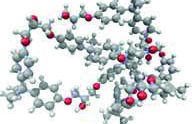
Epoxy adhesives are widely used in industries ranging from electronics to aerospace due to their versatility and performance. Their unique molecular structure allows for a broad range of mechanical properties, making them suitable for applications that demand both flexibility and strength.
Finite Element Analysis (FEA) and system modeling are often used in these industries to support material selection and product design, gaining speed and saving development costs. Herein, we explore key mechanical properties of epoxies and their relevance in FEA to help you model how epoxies will work in your devices.
Why Epoxy Properties Matter
Epoxies can vary from soft and flexible to hard and rigid. Softer materials help relieve stress, while harder ones provide high strength and acoustic benefits. Unlike thermoplastics, epoxies are thermosetting polymers, meaning they behave differently under stress and temperature changes. Understanding these properties is essential for selecting the right adhesive and accurately modeling its performance.
Key Mechanical Properties
Strength
This is a key performance attribute related to how strong the bonding forces are. In most applications, epoxies experience shear stress rather than tensile stress. Two common tests are used to measure shear strength:
- Lap Shear Test
Bonds two overlapping aluminum coupons and applies shear force until failure. Results are reported in psi and are useful for structural applications. - Die Shear Test
Pushes a small gold or ceramic die (2 mm × 2 mm) adhered to a gold-plated kovar or glass substrates. Results are reported in kg and psi, making this method ideal for electronics and small components.
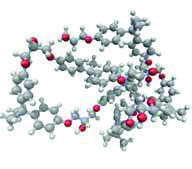
Crosslinked Epoxy
(For more details, see Epoxy Technology Adhesive Application Guide.)
Modulus
Modulus indicates how rigid or flexible an epoxy is. Epoxies exhibit viscoelastic behavior, combining elastic and viscous responses. Therefore, modulus is often measured using Dynamic Mechanical Analysis (DMA):
- DMA Method:
Uses a cyclic Three-Point Bend Test to detect phase shift (tan δ), which is the ratio of loss modulus (viscous component) to storage modulus (elastic component).
The storage modulus serves as a good approximation of Young’s Modulus for epoxies.
Temperature Effects
Epoxies behave differently from thermoplastics at high temperatures. They do not melt or flow above their glass transition temperature (Tg). Instead:
- Above Tg, modulus decreases, and the material softens.
- Cross-linking maintains shape and adhesion even above Tg.
- Increased chain movement raises the Coefficient of Thermal Expansion (CTE).
Many epoxies perform well above Tg, but understanding these changes is vital for thermal stress modeling.
Note that a lower CTE does not always guarantee better resistance to thermal stresses. While low CTE reduces dimensional changes with temperature, it is difficult to match the CTE of bonded substrates, and low CTE materials tend to be rigid, which can cause de-bonding under thermal stress. Instead, materials with a lower modulus are more effective at absorbing thermal stresses, even if their CTE is high.
Hardness
Hardness provides an approximation of rigidity and complements modulus data.
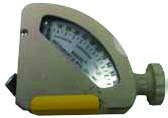
- Measured using Shore® Durometer:
- Shore D for rigid materials
- Shore A for softer materials
- Expect variations of ±5 units due to operator and sample differences.
Poisson’s Ratio
Describes dimensional changes under stress in axial and transverse directions.
Most epoxies exhibit a Poisson’s ratio of 0.3–0.35, with 0.3 commonly used for modeling.
Conclusion
The above information provides a general guideline for epoxy selection in finite element analysis and can aid in predicting the performance of an adhesive for specific applications. Many times, adhesive performance can be optimized by adjusting cure schedules, application method and surface preparation.