














For engineers designing photonic packages, advanced sensors, or assemblies with delicate components and mismatched materials, thermal stress is the invisible pain point. Room-Temperature Curing Electrically Conductive Adhesives (RT ECAs) are the definitive solution, eliminating the warpage and misalignment caused by high temperature oven cures.
However, this significant advantage comes with one critical trade-off: careful control over the curing environment. Unlike heat cured adhesives where you apply heat to drive the reaction, RT ECAs rely on a slower chemical reaction at ambient conditions. This guide details how to master that environment to achieve reliable conductivity and robust bonds.
Non-negotiable Trinity for RT ECA Success
The performance of your RT ECA hinges on maintaining three parameters consistently throughout the entire cure cycle:
- Stick to the Exact Mix Ratio
The resin and hardener are designed to react in a precise molecular ratio. Always follow the mix ratio on the Technical Data Sheet by weight. Small deviations can disrupt stoichiometry, hinder crosslinking, leading to incomplete curing, high resistivity, and weak bonds.
🔎 Need help converting weight-to-volume? Reference this article.
- Maintain Temperature Between 23°C and 27°C (73°F–81°F)
This is the activation energy window. Even a few degrees below 23°C can significantly slow the reaction rate, resulting in incomplete curing.
Curing below 23°C is not recommended. - Keep Relative Humidity (RH) Between 40% and 60%
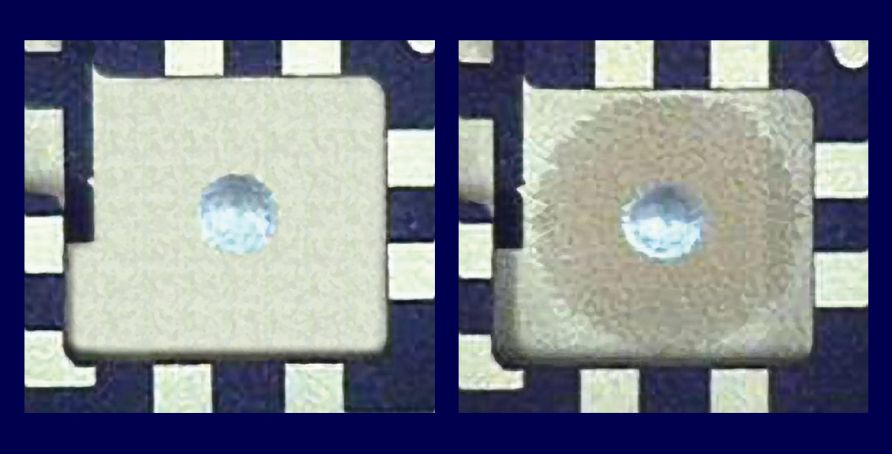
Humidity plays a direct role in establishing the conditions necessary for proper electrical conductivity during cure. Outside this range, conductivity issues may arise—even if the adhesive appears fully cured.
The Science Behind the Specifications: Why Control Matters
When temperature or humidity drifts outside the ideal range, the adhesive internal chemistry is compromised. Low-surface-tension components, like amine hardeners, migrate toward the air interface.
Under ideal RH conditions (40-60%), this migration is stopped by the formation of a thin, stable amine carbonate barrier (Amine + CO₂ + Water Vapor) at the surface, stabilizing the internal chemistry for a uniform cure.
Without this barrier, migration continues unchecked, disrupting the stoichiometric balance. The result is an incomplete, non-homogeneous cure. Over time, the material may harden, but its electrical conductivity will be compromised and unstable. This is why post-curing at elevated temperatures cannot fix the issue and often makes resistivity worse.
Validating Performance: How to Measure Volume Resistivity (VR)
Volume resistivity is the key metric for electrical performance of an ECA.
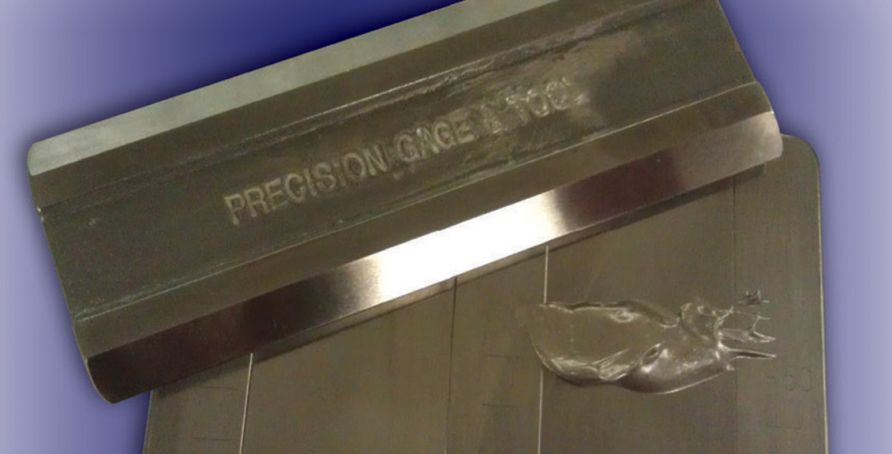
- Dispense a uniform adhesive stripe on a glass slide.
- Allow it to cure under controlled RH and temp.
- Apply voltmeter probes at a set distance along the stripe.
- Calculate using the following formula:

Where:
R = Measured resistance (ohms)
w = Width (cm)
t = Thickness (cm)
L = Length (cm)
How Do You Know It’s Cured?
For process qualification, measure the volume resistance at the intervals specified in the curing schedule. A stabilized reading indicates cure completion.
Advancing the Process: The Hybrid-Cure Advantage
While mastering environmental control unlocks the low-stress benefits of traditional RT ECAs, one inherent challenge remains: the lack of handling strength during the extended cure period. Components must maintain perfect alignment for hours or days without any mechanical fixity, introducing a risk of drift that can ruin a precision assembly.
This is where hybrid-cure technologies, such as UV-tack-able ECAs, provide a strategic advantage. These advanced materials solve a core process vulnerability by using a two-stage mechanism:
- Fixturing with UV Light:
A brief UV exposure triggers an immediate polymer network formation, creating handling or “green” strength within seconds. This instantly locks components in precise, micron-level alignment, eliminating the risk of drift and enabling immediate further handling. - Stress-Free Final Cure at Ambient Temperature:
Following the UV tack, the adhesive undergoes a gentle, room-temperature final cure (typically ~24 hours). This preserves the essential low-thermal-stress benefit for sensitive components while completing the polymerization for ultimate strength and conductivity.
In essence, this technology successfully decouples alignment from final cure. You gain the immediate process control of a fast-fixturing adhesive while retaining the long-term material compatibility and reliability of a traditional RT cure.
Conclusion
Mastering traditional RT ECAs is the foundation for reliable, stress-free assembly. As outlined, their performance is achieved through disciplined environmental control and is ideal for a wide range of applications.
For high-value, precision-critical assemblies—such as in photonic coupling, laser diode attachment, or anywhere micron-level alignment is as crucial as thermal management—forward thinking engineers are adopting hybrid cure technologies to overcome this limitation. By providing instant handling strength while preserving a low-stress final cure, these advanced materials directly address the core process limitation of traditional ambient cures, improving yield and enabling more robust manufacturing flows.
Whether your priority is the proven path of traditional RT cure or the enhanced control of hybrid cure, understanding the science behind the process is the first step to success.

Need Support with RT ECA Processing?
Our technical experts are here to help you f diagnose process challenges and select the optimal material—from traditional RT ECAs to advanced hybrid-cure systems—for reliable, high-performance results.
Contact us at techserv@epotek.com